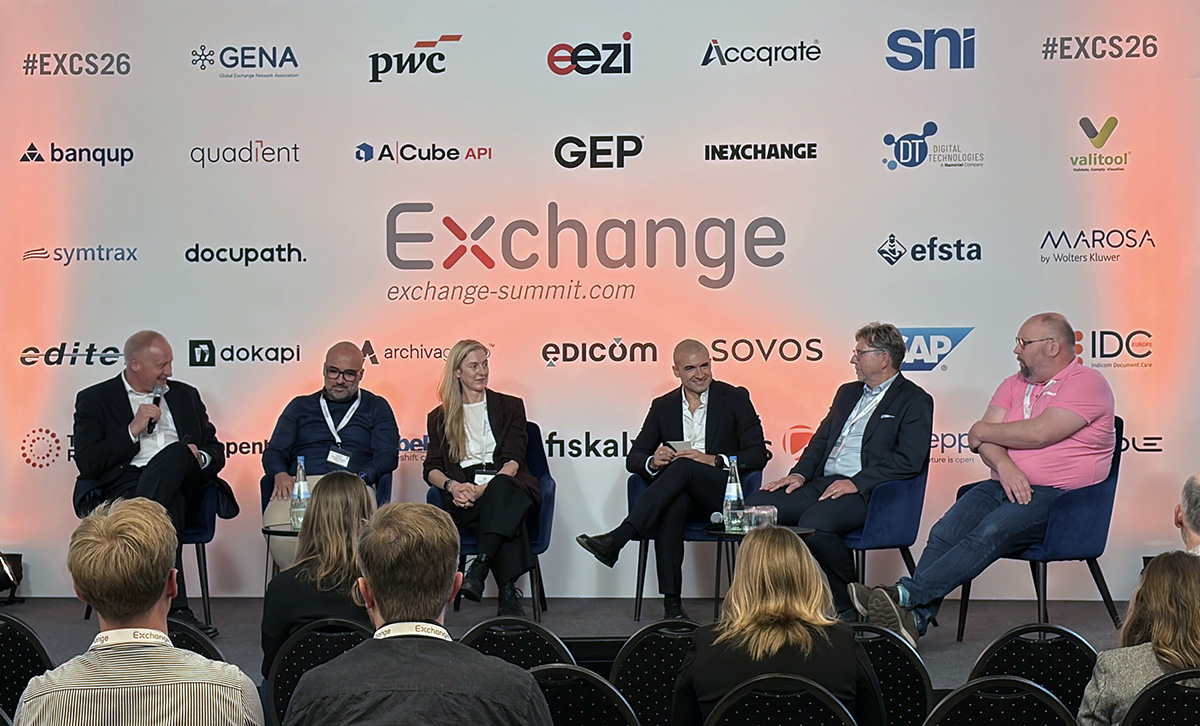
Borderless ambitions but national obstacles
Europe’s e-invoicing operators want to see a connected digital ecosystem for trade, one where businesses and service...

The e-invoice in Europe
On March 31, 2026, the Spanish Council of Ministers approved the royal decree (Ley Crea y Crece), which mandates the use of e-invoicing and requires electronic reporting within four days of the transaction. However, the implementation date has not yet been finalized. The tax authority (AEAT) has confirmed that the announced schedule has been delayed because the necessary ministerial decision was postponed. Spain already has an established B2G system in place (since 2015) utilizing Facturae and the FACe portal. The SII system was introduced two years later; under this system, large companies — and certain other categories — are required to report invoice data to the tax authority in real time.
Digital developments are moving fast and are being accelerated by the ViDA reform, which will make e-invoicing mandatory for all cross-border transactions within the EU from July 2030.
This guide presents the domestic situation regarding e-invoicing in each country.

Since 2015, all invoices to the public sector must be sent electronically via the state platform FACe using the Facturae format. In 2017, the next step was taken with the introduction of the SII, managed by the Spanish Tax Agency. Instead of filing VAT returns retroactively, large companies (and selected smaller segments) must submit invoice data to the SII no later than four days after the transaction is recorded.
Starting in 2027, new e-invoicing obligations will be introduced. Businesses in Spain must begin using certified invoicing software, VERI*FACTU, to report invoices to the tax authorities. This requirement takes effect on January 1, 2027, for corporations and on July 1, 2027, for other taxpayers.

Spain has decided to introduce mandatory B2B e-invoicing under the Ley Crea y Crece law. Although the reform has been delayed, it has been approved by the Council of Ministers; the final ministerial order is the only remaining step. If the decision is issued in October 2026, the law will take effect on October 1, 2027, initially for companies with an annual turnover exceeding 8 million euros, and for all companies starting October 1, 2028.

FacturaE will continue to be used for B2G transactions, while UBL and CII are included in the new models. Once the B2B reform is fully implemented, all invoices must be issued in an approved XML-based format. The approved standards include FacturaE, UBL, CII, and EDIFACT.
Europe’s e-invoicing operators want to see a connected digital ecosystem for trade, one where businesses and service...

The path forward as one unified company was announced back in June. Four months on, the newly merged Inexchange is...

Sending and receiving e-invoices is becoming more and more common, but it can still quite often be perceived as messy...