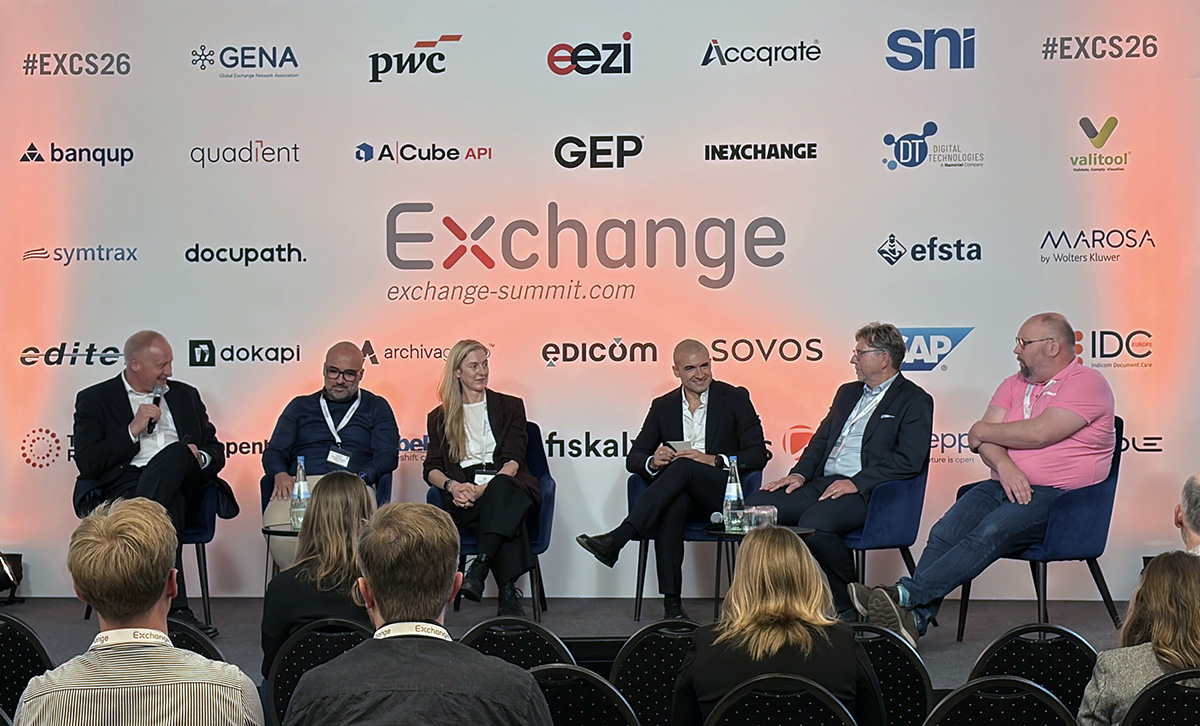
Borderless ambitions but national obstacles
Europe’s e-invoicing operators want to see a connected digital ecosystem for trade, one where businesses and service...

The e-invoice in Europe
Romania has a centralized e-invoicing system, RO e-Factura (ANAF), which has been gradually made mandatory in more flows. B2G is covered since the system's introduction (2021), B2B has been extended from risk goods to general reporting (2024) and B2C was phased in voluntarily in the second half of 2024 and became mandatory on 1 January 2025. E-invoicing is linked to increased VAT control via data surcharges such as SAF-T and e-TVA.
Digital developments are moving fast and are being accelerated by the ViDA reform, which will make e-invoicing mandatory for all cross-border transactions within the EU from July 2030.
This guide presents the domestic situation regarding e-invoicing in each country.

Mandatory e-invoicing via RO e-Factura in public transactions (central platform/validation). The system started in practice in 2021 and has since then been subject to a gradual broadening both in terms of tightening and expansion.

For B2B, there were initially limited requirements for fraud-sensitive goods such as alcohol, fruit and clothing, but on January 1, 2024, an extension was implemented and since then mandatory reporting applies. Paper invoices are no longer acceptable for tax compliance.
For B2C, e-invoicing was voluntary for an initial six-month pilot period before becoming mandatory from January 1, 2025.

RO_CIUS (national CIUS on EN 16931) as XML via RO e-Factura. Technically, UBL 2.1 and UN/CEFACT CII are usually syntactically supported within the RO_CIUS framework (EN16931).
Europe’s e-invoicing operators want to see a connected digital ecosystem for trade, one where businesses and service...

The path forward as one unified company was announced back in June. Four months on, the newly merged Inexchange is...

Sending and receiving e-invoices is becoming more and more common, but it can still quite often be perceived as messy...