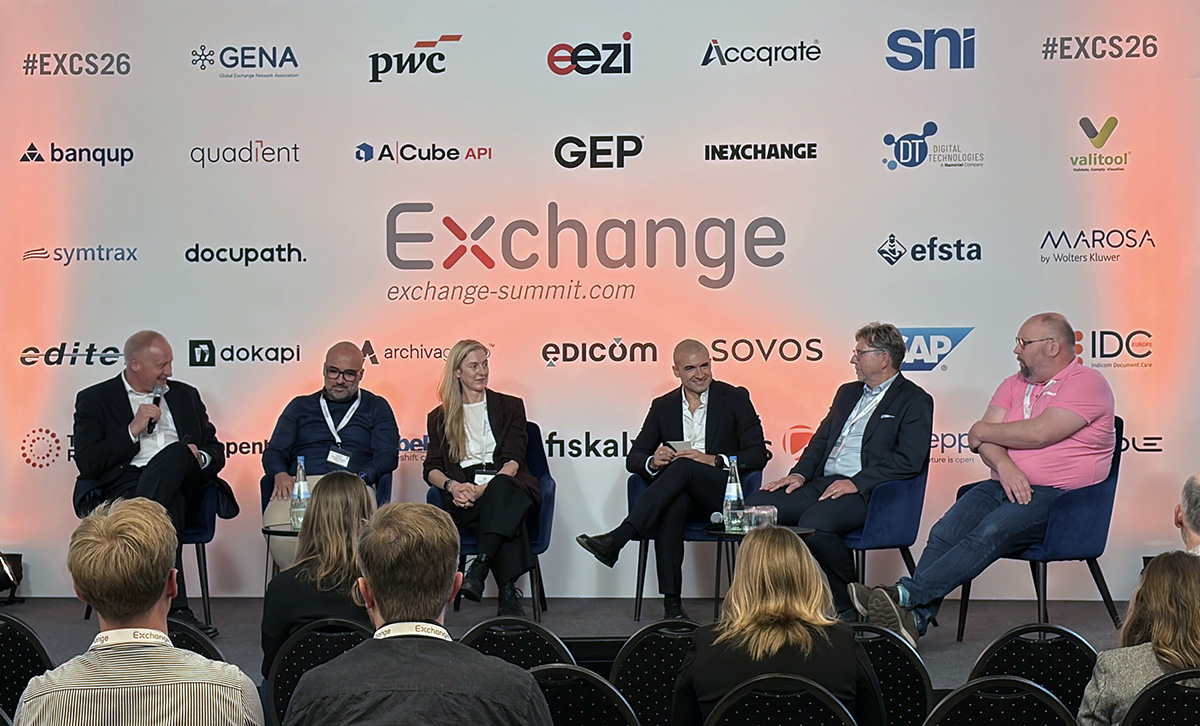
Borderless ambitions but national obstacles
Europe’s e-invoicing operators want to see a connected digital ecosystem for trade, one where businesses and service...

The e-invoice in Europe
Italy has progressively introduced electronic invoicing requirements first towards the public sector and then in an increasing number of private transactions. Since January 1, 2019, electronic invoicing is mandatory for transactions between private parties (B2B) and also to consumers within the country via the state exchange network Sistema di Interscambio (SDI).
Digital developments are moving fast and are being accelerated by the ViDA reform, which will make e-invoicing mandatory for all cross-border transactions within the EU from July 2030.
This guide presents the domestic situation regarding e-invoicing in each country.

Italy has a mandatory B2G e-invoicing system. Since 2014-2015, all public authorities must receive invoices in FatturaPA format (XML). Suppliers are required to send their invoices via the government platform SDI which validates and forwards them.

Italy has mandatory e-invoicing for B2B and B2C since 2019. All VAT registered businesses must send invoices in FatturaPA-XML via SDI. The requirement applies to domestic transactions and is part of the CTC model of VAT control, with the exception of some cross-border business and small operators.

The standard used is FatturaPA in XML format.
Europe’s e-invoicing operators want to see a connected digital ecosystem for trade, one where businesses and service...

The path forward as one unified company was announced back in June. Four months on, the newly merged Inexchange is...

Sending and receiving e-invoices is becoming more and more common, but it can still quite often be perceived as messy...