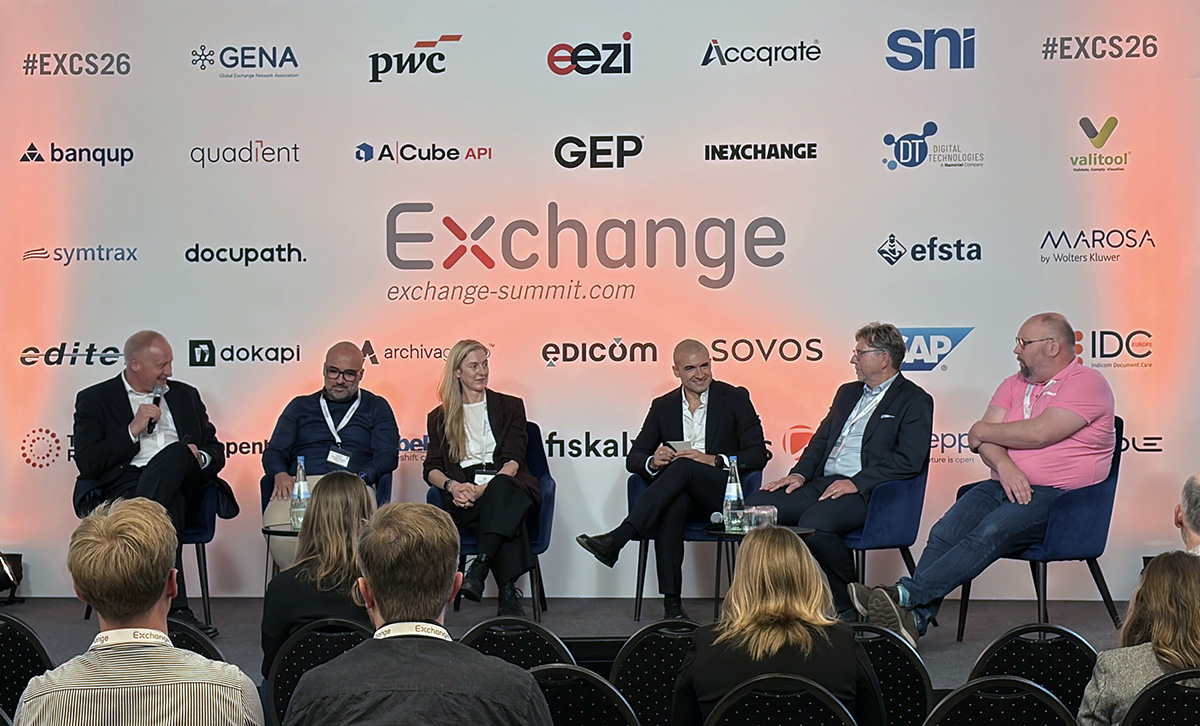
Borderless ambitions but national obstacles
Europe’s e-invoicing operators want to see a connected digital ecosystem for trade, one where businesses and service...

The e-invoice in Europe
Hungary has set the strategy to be able to comply with ViDA (VAT in the Digital Age) when this EU initiative starts in earnest in summer 2030. The plan has been prepared by the National Tax and Customs Administration (NTCA) and the Ministry of National Economy (NGM) and presented in the form of an implementation document. The proposed framework will require structured digital invoicing - for domestic B2B, intra-EU B2B and B2G transactions - using the XML format EN16931. The framework introduces a five-corner model for e-invoicing involving taxpayers, service providers and the tax authority.
Digital developments are moving fast and are being accelerated by the ViDA reform, which will make e-invoicing mandatory for all cross-border transactions within the EU from July 2030.
This guide presents the domestic situation regarding e-invoicing in each country.

E-invoicing is already relatively established today. In the future, a continuation is expected and it is likely that mandatory e-invoicing will be introduced combined with a government-integrated platform that is likely to be adapted to ViDA standards.

It is not clear when, but it is clear that e-invoicing will be mandatory. E-invoicing will be required for all domestic and cross-border transactions. The reform includes buyer reporting and status reporting. The buyer will be obliged to confirm receipt of invoices within five days. In addition, a five-cornered transmission model will be implemented, allowing invoices to be sent via tax authorities or service providers.

Currently NAV XML version 3.0. The strategy states that the legally valid invoice should always be a machine readable XML file in line with the EN16931 standard. The use of Peppol will be optional. Hungary will establish a Peppol authority.
Europe’s e-invoicing operators want to see a connected digital ecosystem for trade, one where businesses and service...

The path forward as one unified company was announced back in June. Four months on, the newly merged Inexchange is...

Sending and receiving e-invoices is becoming more and more common, but it can still quite often be perceived as messy...