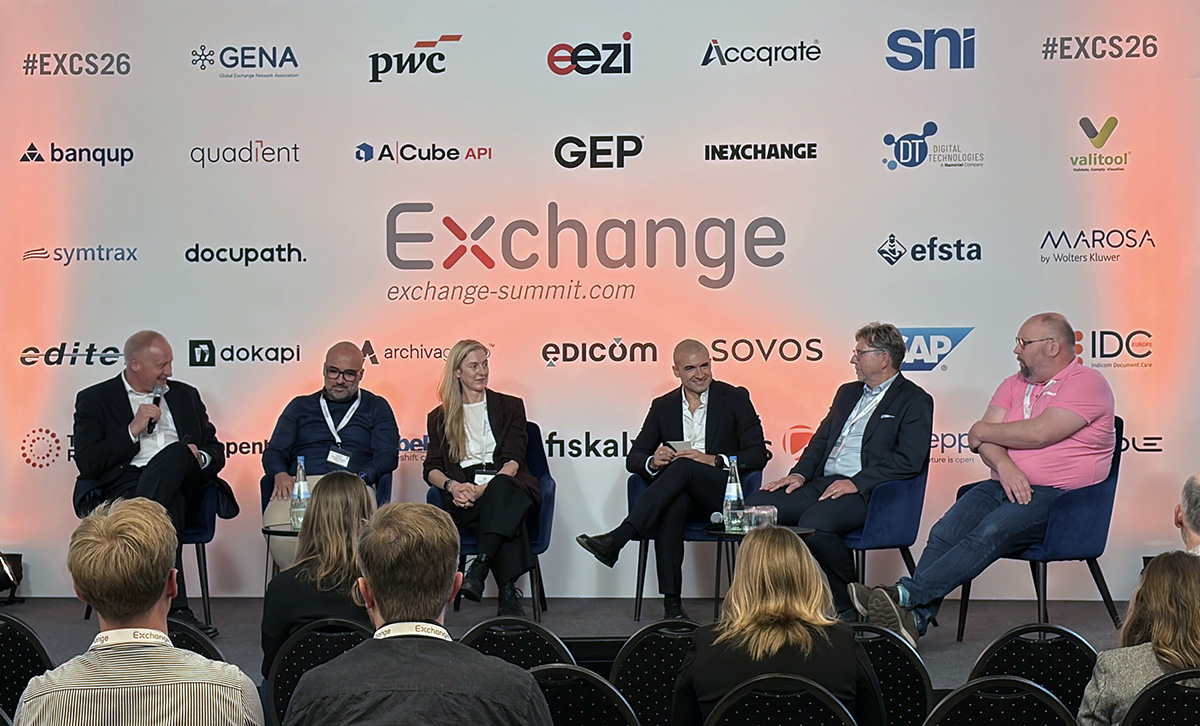
Borderless ambitions but national obstacles
Europe’s e-invoicing operators want to see a connected digital ecosystem for trade, one where businesses and service...

The e-invoice in Europe
E-invoicing is mandatory when invoicing the public sector, via NemHandel in OIOUBL or Peppol BIS Billing 3.0 (EN 16931). There is no general B2B requirement, but the new Bookkeeping Act requires companies to use digital accounting systems that support e-invoices by 2026.
Digital developments are moving fast and are being accelerated by the ViDA reform, which will make e-invoicing mandatory for all cross-border transactions within the EU from July 2030.
This guide presents the domestic situation regarding e-invoicing in each country.

E-invoices for the public sector are mandatory and must comply with EN 16931 and be sent via NemHandel (Peppol or OIOUBL).

There is no general e-invoice requirement today. However, the Bookkeeping Act is being introduced in stages. Companies must use a digital accounting system that supports incoming and outgoing e-invoicing via NemHandel/Peppol (starting in 2024-2026 and completed from January 1, 2026). It is thus a system requirement, not a mandatory requirement for B2B to be able to send electronically.

OIOUBL (national UBL format) and Peppol BIS Billing 3.0 via NemHandel.
Europe’s e-invoicing operators want to see a connected digital ecosystem for trade, one where businesses and service...

The path forward as one unified company was announced back in June. Four months on, the newly merged Inexchange is...

Sending and receiving e-invoices is becoming more and more common, but it can still quite often be perceived as messy...