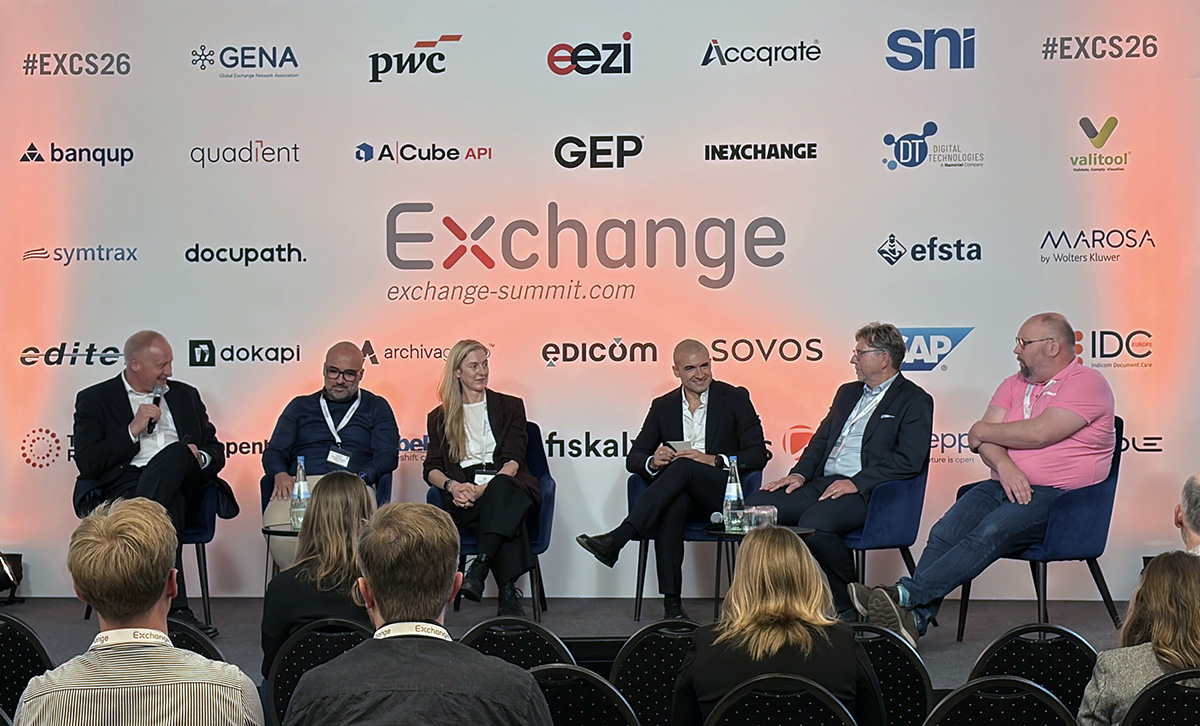
Borderless ambitions but national obstacles
Europe’s e-invoicing operators want to see a connected digital ecosystem for trade, one where businesses and service...

The e-invoice in Europe
Bosnia and Herzegovina is very close to introducing mandatory e-invoicing for both B2B (business-to-business) and B2G (business-to-government) along with real-time reporting. This is a comprehensive reform package aimed at modernizing the country's tax and invoicing system, reducing tax evasion and increasing transparency in business transactions.
The bill has been approved by the House of Representatives and has moved to the upper chamber, the so-called House of the People.
Digital developments are moving fast and are being accelerated by the ViDA reform, which will make e-invoicing mandatory for all cross-border transactions within the EU from July 2030.
This guide presents the domestic situation regarding e-invoicing in each country.

Currently, there are no mandatory e-invoicing requirements for the public sector. Paper invoices are still accepted. Electronic invoices may exist voluntarily, but without a common platform or technical requirements. However, ongoing legislation points towards mandatory e-invoicing for B2G. Going forward, a central government platform - CPF (Central Platform for Fiscalisation) - with real-time validation and verification ID is expected.

For B2B, contractual freedom applies for the time being, with no e-invoice, structure or reporting requirements. B2C is mainly covered by cash-based fiscalization. This means that different business transactions are sorted into categories and that the requirements for reporting and control vary. In upcoming reforms, mandatory e-invoicing is also planned for B2B with real-time reporting via a central platform (CPF). For B2C, the focus remains on digital reporting via cash register systems.

No national format requirements so far. Paper, PDF and EDI can be used in parallel with electronic formats. But in planned reforms, the direction is clear towards structured e-invoices. EN 16931 is expected to provide the semantic basis with XML-based formats such as UBL as the likely choice. Invoices will be validated centrally and assigned a unique ID, while PDF will not be allowed as the main legal format.
Europe’s e-invoicing operators want to see a connected digital ecosystem for trade, one where businesses and service...

The path forward as one unified company was announced back in June. Four months on, the newly merged Inexchange is...

Sending and receiving e-invoices is becoming more and more common, but it can still quite often be perceived as messy...